Why a new year party turned into tragedy on January 1, 2026 in Crans-Montana Switzerland
2026-01-03
1:30 a.m., Crans-Montana: a massive fire breaks out in a bar. Forty people die and approximately 150 suffer burns.
After the initial shock, questions arise. How could such a tragedy occur in Switzerland, a country renowned for its strict enforcement of laws?
Swiss news reports have described the response of emergency services and authorities, as well as the public's reaction. Were safety standards met? These are obvious questions on everyone's mind.
Let's say the investigation is ongoing, to be cautious, but witness accounts point to a series of malfunctions.
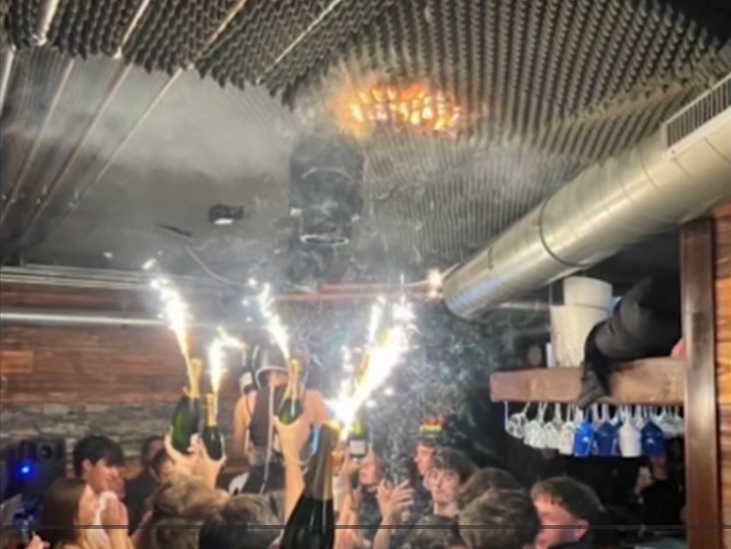
The establishment used sparklers to create a show when customers ordered bottles. These sparklers ignited the fire.
The servers were carried on their shoulders, wearing masks to enhance the spectacle. This brought the sparklers closer to the ceiling.
Soundproofing foam was installed on the ceiling. It was highly flammable. And the fire spread rapidly through the ceiling, releasing toxic smoke and intense heat.
The staff were clearly untrained, as amateur videos showed no signs of them attempting to extinguish the fire or making any announcements. On the contrary, the music continued to play.
There was no system in place to automatically shut off the music or make announcements while simultaneously switching on the lights.
Evacuation was problematic. Only one exit was visible. It was narrow, and in the ensuing panic, this made it difficult to escape.
According to the authorities, there was an emergency exit, but no one knew where it was.
In short, candles on a highly flammable material in a crowded space, without an evacuation protocol, no trained staff, and no emergency exits, contributed to a very high death toll.
So we'll hear that everything was up to code, that the required inspections had been carried out. And so on and so forth.
My conclusion: if all the safety standards were met, then these standards are inadequate.
Flammable materials are prohibited in public places. Candles are prohibited.
An evacuation protocol is mandatory: turn off the music, turn on the lights, and sound the evacuation signal. Staff training and regular drills are mandatory. Clearly visible and easily accessible exits are required to allow for rapid evacuation. Fire suppression systems are mandatory in public places.
Obviously, the investigation will confirm or refute these hypotheses. But what do we do next? Do we look for those responsible? Knowing who is responsible won't change the tragedy, let alone reduce future risks. What's needed is to adapt the safety regulations for these places.
2035-11-12